Read full transcript
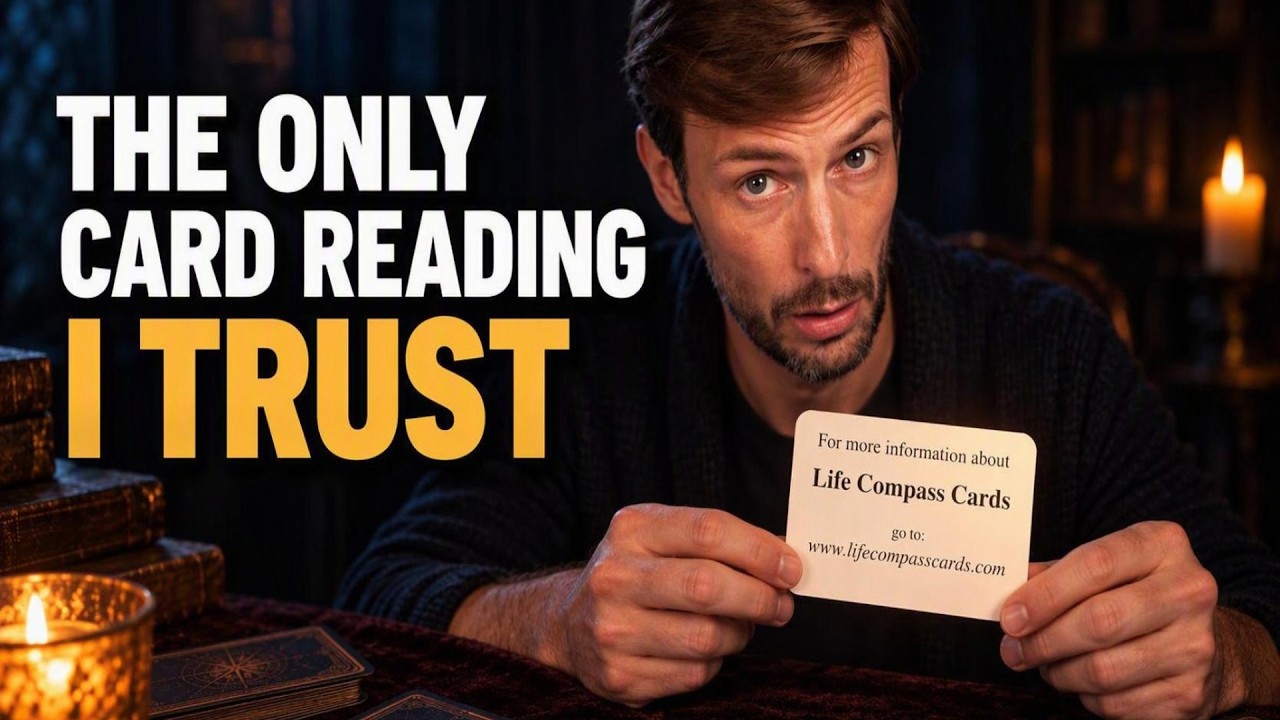
Hello and welcome to The Meaningful Sh*t Show. It's about high time for a new episode. And today, I have some. something special and visual, and I'm going to go all the way back to my 1st episode. Values, but I'm going to show you the value cards that I was talking about in that exercise. So if you're... listening to this, I will do my best to explain it through audio. But, you know, the visual might be handy for this. But I'll make sure to post something on my Substack as well, with pictures and summaries of basically what's going to be in the in the video. And without further ado, I present to you the Life Compass cards. These were developed by Joanne Steinwachs. Uh, she's uh, clinical professional in Denver. I I don't know her. Uh, but I ran into this deck of cards, and although we live in these. times of everything digital. I like the physical cards. All right, they come with instructions, but of course, you can modify them according to how you exactly want to determine your values. I'm going to talk through how I do that. So step one. Take your deck in your hand, and as quickly as possible, you sort it into 2 piles. Important to me and not important to me. And then you discard the not important to me pile. Makes sense, right? Put this to the side. Let's hide. The next steps until later. And be aware that this deck does come with some blank cards as well. I can't remember if I took them out or not. So let's put these to the side. And let's go through them. So this is going to be not important to me. This is going to be the important to me. Important to me. 24 hours later. So now we have this pile with the not important to me, and they are out of here. This much larger pile of important to me, you know? We, uh, we need to whittle that down. So, luckily, there is a step two. And there's more words here. So. Take the important to me pile and take out all the cards you chose to solve a problem or because it meets an ideal. For example, you might have chosen the health card because you are struggling with medical problems, or you might have chosen kindness because you think that people should be kind. At the end of this sort, you will have 3 piles. Shoulds, problems, and what's left. We have understanding here. I think for me that is a should. Approximately 10 hours later. We have shoulds, we have problems, and we have what's left, and what we, of course, see is that the what's left pile is much, much, much, much, much larger. So, what happens after this? Step 3 happens after this. So we take the should pile and the problem pile, we put them together and put them aside. We do not discard them. And then we take the what's left pile, and we sort it into 3 piles. Very important, kind of important, and little important. All right. So this is more where the rubber meets the road. So we take these two. I'm putting them together. And this is my discard pile, and I'm putting this one on the side, off camera. And now, we are down to, you know, that's still, oh, that'd be 50, 60 cards or something like that? I don't know. Oftentimes I kind of like go through them and I, make sure that I have like a good representative card for very important, kind of important, a little important. So I just start with the one, justice, by very definition right now, it's middle, middle of the pack. And we'll see what we end up, like risk. I think risk is less important than justice, so that helps me. Feelings are more important than justice, although, you know, it's a very intuitive call. So, and then we, uh, we keep going. 8 hours later. Important community important. All right, so now we have these 3 uh, uh, 3 piles. Little important, little important, kind of important, very important. All right, that was step 3. But wait, there is a step four. Take the very important pile, this one, discard the other 2 piles and repeat step three. Oh. Of course, I already knew that, but these 2 piles go out the window, right? We sort the very important pile several times, discarding the other 2 piles until you're down to 7 cards. And for me, it's like 7 plus minus two. Right. Like, if it's like 9 or 10, I think that's like a decent one to end that as well. But let's see where it takes us. So we take these 2 piles. And we discard them. Boom, gone. And then, step four, we go and sort that. So I start with one in the middle, again, or a community. Well, community is actually very important to me. So out of the gate, that's in my very important pile. And learning less strength, Less, maybe it's in the middle. 8 hours later. Let's see with how many cards I ended up. One, two, three, four, five, six, seven, eight, nine, 10, 11, 12, 13, 14. So Still 2 times too much. So let's start with loyalty in the middle. Consistency is as important. Joy is more important. Creativity is more important. Integrity. 8 hours later. All right, and what do we have? One, two, three, four, five, six, seven, eight. All right. So that's close enough. Let's lay them out. Oh, wait, before I do that, that was step four. There is a step 5 and step 5 says when you are down to 7 cards or 8, arrange them in any way that seems right to you, look for patterns and connections. If at this point, something seems to be missing, go back to your problems/shoulds pile, look through it. Add what you want, but discard. Keep the number down to about 7 cards. This is the broad view of your character. So I'm still on board with that. All right. Put that right here, so we know what we're doing. 2 hours later. Then I go back to the pile with the problems and my shoulds. Let's see what we are missing. One hour later. Seven. So I got rid of number 8 apparently. So this is the broad view of my uh, of my character. I'm all about self-expression, community gratitude, structure, health, integrity, and joy. Well, that feels good to me. Now. This deck comes with 2 more steps. It says like, choose 3 cards. These are your top values in your life. If they are out of balance, you will be out of balance as well. That sounds like sort of like kind of like the fear-based values. Where you're afraid that if, you know, shit shit falls apart if you don't invest in them. One hour later. These are more, my base values, I would say. I need my structure. I need my health to be in place and I need to be on the inside as I am to the outside because otherwise things fall apart. And if I'm there, I can be in a situation that I work on self-expression, gratitude, community, and joy. Yeah. I actually feel pretty good about that. So, these are three. But then if I have to choose just one that defines me. I have a hard time with that. I guess, if you put a gun to my head now, it would be, I guess, health? The cards run out of instructions now. But, oftentimes as I've done this exercise, like I'm left a little bit with uh, okay, and now what situation. So, I like to make it a little bit more. Yeah, to do something else. And that is... Is I like to define. How fully? Are you embodying this value? What would? Uh, 10 out of 10 expression look like? I like to also write down, is this a fear? Or attraction? Value. And what will follow from that is kind of like a priority. And this is like kind of like an iterative approach. So as you're writing about these things, do keep an eye on the pile that you have with the shoulds and the problems that you had previously. You can always go back switch things in and out. Let's start with how fully am I embodying that value. So we're going to have the value over here. Going to have health. One hour later. Value. And it's like, embody. And then then I have fear. Attract. Which is something that I can more easily term, for me, health is more attracting, could be fear based as well. Structure. I feel like it's more like fear-based thing. Like if I don't have structure. I think that would be, that would be problems, right? I have to do that. Integrity. And so, I think it's a combination of both, but it's a little bit more fear-based as well in the sense of like, yeah, it promotes, promotes stability. Joy is something that attracts. Self-expression is something that attracts, gratitude is something that attracts and community can be like a little bit of a combination as well. So I'm going to give that, like, a mixed score. It's a little bit, it's a little bit of both. I think that there's something very inherently that attracts. Attracts me, but it's also very much I'm aware of that I'm a social creature and that I need it. And I'm like really scared of not having it. So, now. One hour later. So I did my exercises. Didn't have to do that on camera. So I wrote out what, for each of these things, what that specifically means for me. So now, I can say, oh, I have a certain 10 out of 10, and mind you, 10 out of 10 doesn't mean that that's actually the level that you want to be at. Right. I think that I am about like an 8 out of 10. For structure. I think I'm, um, I think I'm uh, 7 out of 10. I think that I'm pretty dang structured, but there's, There's quite a diff between the 10 out of 10 expression and where I am. Integrity? I think we're doing pretty pretty good there. 9 out of 10. Joy? I think it's something that I can really can really work on. I tend to be a pretty serious guy and be focused on productivity versus play and joy. Self-expression. I'm growing in that as well. So I want to say that there's like a 7 there, because there's so much I could, I could do around that, but it doesn't mean exactly in this situation as well, is that I want to have an expression 10 out of 10 more about that later. Gratitude, think, doing pretty good there. Pretty high on the list and community, community is always something that I'm uh, that I'm growing. So, I think, I think eight. But there, it doesn't mean that you can embody all of these 10 out of 10. So the priority comes out of like, where do you want to distribute these values? Like, I compare them to attribute sliders, like from a role-playing game, right? Oftentimes you can't have a high intellect and high strength and like whatever, high charisma or something like that. There's choices that you that you need to make. So, in this case, I would say like, we don't have 70 points to spend yet. It's really hard to get like to 70, right? Like 10 out of 10 for each. Maybe you more have like, I don't know, like, you can top out at 60 or something, something like that. Right? So where am I at? I'm like, 15, 24, 30, 37, 45, um, 53. So maybe I have like 7 points to spend, and of course, this is like wet finger in the air estimate, like, who knows? But let's say that I have, I don't know. Let's go for 5 points that I have 5 points to spend energy on on improving and remember that maintenance costs energy as well. So if I, like, have these points to spend, like, where, where do I want to spend those, right? Do I want to spend them? Uh, like, at one point, there's of course also like sort of like diminishing returns, right? Like spending getting health to from 8 to 10 is probably a lot more work. than getting joy and self-expression, one extra. I don't know. It's more of an art than a science, but I would say for me, I can, I can spot very easily that joy is a lot lower than I wanted to, uh, to be. So I want to like add more points there. So I'm like, probably I want to aspirationally. I want to be at eight. I don't know, I have to be 10, 10, 10 out of 10 joy. That's no. I want to keep investing in integrity, but I'm good with where I am. So self-expression is something that I want to get better at. So I definitely would spend some energy on there. And I think for me, like investing a bit in structure. So bringing that higher as well is important, and then I've spent about like 4 points. And as such, I have now created a priority for myself. So the moment that I use these values, I think about decisions that I make in my life. I can see, okay, where am I trying to grow right now? Where am I trying to maintain? And technically in some of these situations you can be. You can flag as well, that you are at a 10 out of 10 expression. Like, let's say, for example, that, uh, work was on there, and I'm just, I'm workaholic, I'm overworking. So I'm like, my work expression is 10 out of 10. But do I want it 10 out of 10? 10 out of 10 necessarily, isn't necessarily good. It could be good, right? But, like, doesn't necessarily have to be. I want to get back to why we're doing this. So there's 3 things, 3 things that I think are very important about this exercise first. Just the joy of self-discovery. I get a kick out of seeing my brain make choices, seeing how. I like some values and how I don't like other ones. I just find that that's interesting. So that by itself tells you, learn, you learn something. about yourself, like even without the other 2 points, which have concrete effects. The 2nd one is that. I feel through this exercise, I see clearer what's mine and what's society's. Right? And although I choose certain, I don't, I didn't choose wealth. I didn't choose work. There's a bunch of other things that society likes, likes me to do. any way that I didn't choose. But by doing that, I do realize where I am influenced by that. Where I'm making choices that are not in my best interest, where I have to push back against society. I'm like, okay, well, I understand that, spot in society and I want certain things, but this is where I want to go my own direction. And for the 3rd is more. I was talking about society, like at large. That's like one thing, impersonal, but also the people around you. What I personally find, and I talk about these, uh, these things in my episodes a lot, is because I would say that my upbringing was not an upbringing where personal growth, mindfulness, and therapy, they were held in high account, right? So to a certain extent, I feel that the choices I've had to make that are good for me, my egoic, egoistic choices that make it so that I'm doing better in life. Some of my closer people don't really like or understand that. So I don't get that intrinsic approval. Oh, you're doing something that I approve of. Like if I, you know, whatever. Get a better job or a manager of this or something like that, I would get both the societal approval and the inner circle approval or something. Like, but then there's like these things where, I see now physically in front of me, some of the things that are important to me, but not everybody in my community, uh, shares that, which is, of course, is, makes sense. But this helps me to be, to be egoistic in the right way. And I think I've talked about this before, I think. Egoism has, has, um, has a bad rap in society. Like if you call someone egoistic, that's an insult, right? Or selfish or something like that. And while, I understand that, I think most of the time that egotistical behavior comes from a subconscious place. Where you don't know, like that's like the sneaky ego stuff that's happening. It's kind of like flying under the radar. And I, I think this is more like a pure upfront version of egoism where you can, instead of it, unconsciously happening to you. And it being driven by like sort of like more, I don't know, less virtuous, uh, emotions, feelings or something like that. This can be a very harmonious, virtuous way of being egoistic. So I like that, giving yourself permission to take these values seriously, right? Because it's very easy to dispel this, right? Like, oh yeah, yeah, this is all, this is all a cute exercise, but, you know, When the working day starts, I have to go back at it. So, but it's great to give yourself permission to use this as a tem- plate for all these things that you do in everyday life. And I go back to my, um, the mantra about awareness alone can be curative. Doesn't mean. And I will always say that in all my episodes, don't change everything all at once. I'm a very much like 1% better every day guy or even 0% better every day. But with awareness, like see what your template is. See, if you're doing what you're doing if it's in alignment with each other. And if it's not what the effect of it is, is resentment building, are you feeling? I don't know, less at ease, something itching, like whatever. What, what is that, what is that difference? And what can you do to become a little bit better every day? Not. Don't don't don't stop what you're doing. That's almost never a good idea. Almost never. Um, yeah. So that's a lot of stuff. So it was a more visual episode. Um. I hope that that worked. And if you listen to this, I hope that it still came across. And uh, yeah, thanks for tuning in and I'll see you next time.